
More REM sleep linked to lower risk of 83 diseases
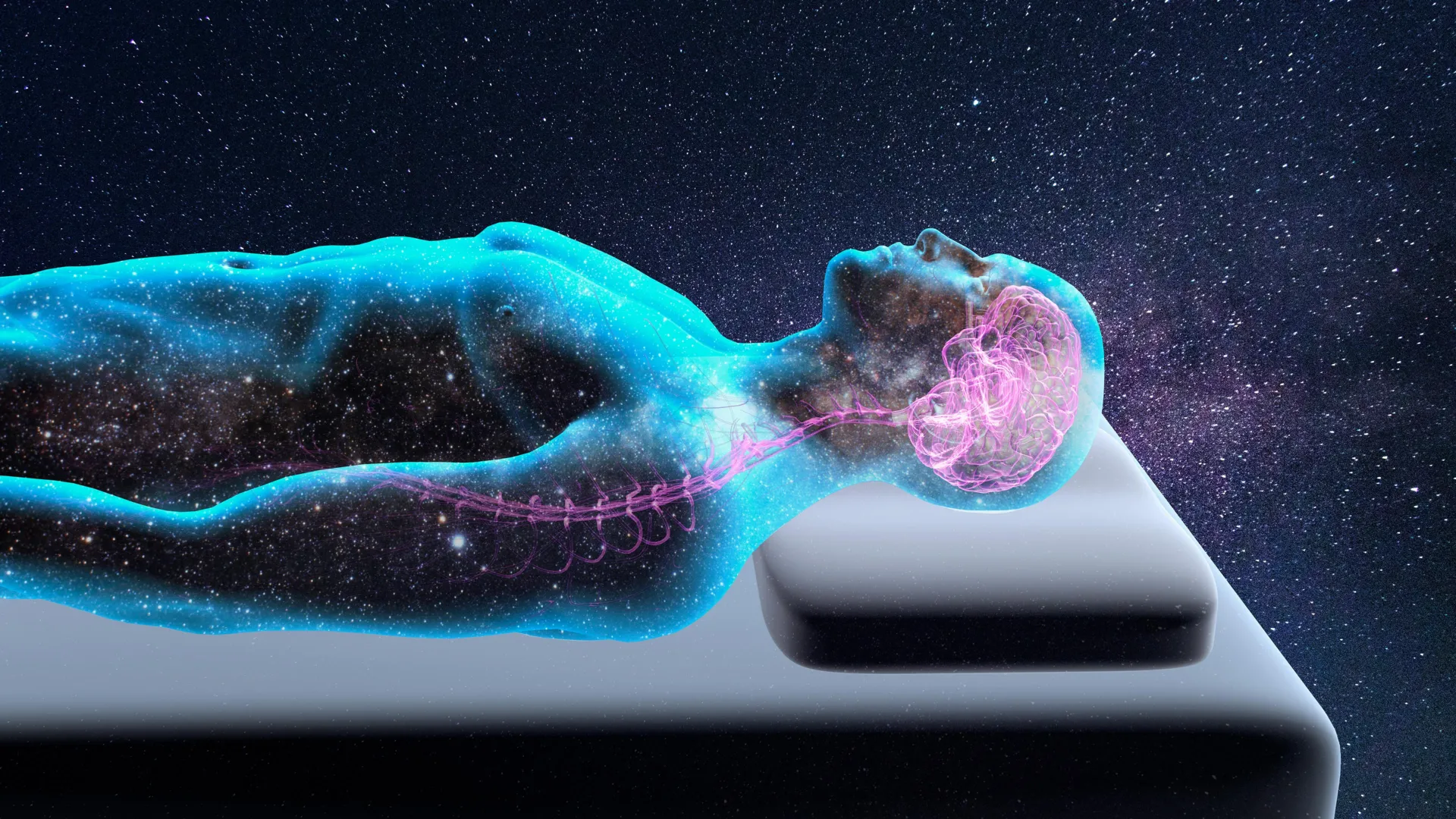
Greater amounts of REM and deep sleep were associated with lower risks of dozens of diseases, and less than 5 hours of total sleep was associated with high risks of disease, according to a new study published September 17th in the open access journal PLOS Medicine by Shengzhi Sun of Capital Medical University, China, and colleagues.
Sleep quantity and quality is a priority of China’s National Health Commission and a focus in China more broadly. The most recent 2026 China Sleep Health White Paper finds that while the average surveyed Chinese person sleeps 6.97 hours per night, 23 percent sleep less than 6 hours per night. The same report notes that only 26 percent of respondents reported a consistent sleep schedule, and that disturbances to sleep have increased over time. Understanding how sleep patterns are linked to disease risk is therefore of great relevance to Chinese citizens.
There remains limited understanding of how sleep stages and other real-world sleep patterns relate to health outcomes. In part, that is because self-reported sleep measures often show poor correlation with objective assessments, making it difficult to capture real-world sleep patterns.
In the new study, researchers analyzed data from 95,559 UK Biobank participants who wore wrist accelerometers for seven consecutive days and nights. The researchers used a deep-learning algorithm to calculate sleep stages (REM, deep, and light sleep), total sleep duration, wakefulness after sleep onset, and night-to-night sleep irregularity. Participants were followed for a median of 8.9 years, and health records were available to test for associations with more than 1,000 disease outcomes.
Greater REM sleep (per interquartile range, 47.6 minutes) was associated with a lower risk of 83 diseases, including heart failure (hazard ratio 0.74), dementia (hazard ratio 0.54), and Parkinson’s disease (hazard ratio 0.20), while greater deep sleep was linked to lower risk of 7 conditions, including type 2 diabetes and major depressive disorder. Greater sleep irregularity and wakefulness after sleep onset were each linked to higher risk of several conditions, including anxiety and substance use disorders. Total sleep duration showed a non-linear relationship with disease risk for many conditions, with the lowest risk concentrated in a 6-to-8-hour window; people sleeping less than 5 hours faced the most elevated clinical vulnerability, with an increased risk of 37 conditions. However, as an observational study, this research cannot establish that sleep patterns directly cause disease risk.
“The findings provide additional evidence supporting the role of a 6-8 hours’ sleep duration as a health safeguard for middle-aged and older adults, likely attributable to more favorable distributions of sleep stages,” the authors say. “Maintaining a sleep duration of 6-8 hours can effectively reduce the risk of multiple diseases, providing new insights for health promotion and preventive practice.”
The authors add, “Phenome-wide association analysis identified 156 significant associations between sleep patterns and incident diseases after Bonferroni correction.”
“Sleep duration exhibited significant non-linear associations with 86 disease phenotypes, with the minimum-risk duration for the majority of these conditions (69 phenotypes) precisely concentrated within a 6-8 hour window.”
This work was supported by the National Science Fund for Distinguished Young Scholars (82025031 to RC), the Key Program of the National Natural Science Foundation of China (82230109 to RC), the Beijing Outstanding Young Scientist Program (JWZQ20240101024 to RC), and the Young Beijing Scholars Project, the Chinese Institutes for Medical Research, Beijing (CX23YZ01 to RC). The funders had no role in study design, data collection and analysis, decision to publish, or preparation of the manuscript.
Comments 0
Leave a Reply
Your email address will not be published. Required fields are marked *
Science
Explore All
More REM sleep linked to lower risk of 83 diseases
A large study tracking more than 95,000 people suggests that how you sleep may be linked to your risk of developing dozens of diseases. People who spe...

GLP-1 weight loss and diabetes drugs linked to nutritional deficiencies in nearly 1 in 6 children
1 hour ago
The “big one” might not come alone: Two major West Coast faults may strike back to back
3 hours ago
NASA Modernizes Commercial Airline Systems
6 hours agoNASA Welcomes Croatia as Newest Artemis Accords Signatory
8 hours agoWhats New
View All
More REM sleep linked to lower risk of 83 diseases

‘They uprooted it all’: Israel bulldozes Palestinian-owned olive groves

Isabel Sandoval, Tricia Tuttle, ‘Elephants in the Fog’ Producer Anup Poudel Join QueerFrames Mentor Lineup as Lab Unveils New Cohort, Southeast Asia Expansion (EXCLUSIVE)
GLP-1 weight loss and diabetes drugs linked to nutritional deficiencies in nearly 1 in 6 children

Paige DeSorbo on Healing From Domestic Violence With Her Pet: ‘Sometimes the Thing That Helps You Feel Safe Again Has Four Paws’

Australia says OpenAI agent hacked Medicare portal

Ryan Murphy Says He ‘Just Finished the Script’ for a ‘Glee’ Reboot and Has Spoken to the Original Cast: ‘They All Were Very Enthusiastic’

Illegal alien allegedly grabs school police officer's gun, shoots him in femoral artery: DOJ

Israel moves to bar both main Arab lists from October election
