
I Am Artemis Katie Spicer
For Katie Spicer, embracing opportunity and challenge has led to giant leaps during her time at NASA. Now as the NASA lander integration lead for Blue Origin’s Blue Moon Mark 2 lander, one of the commercially provided human landing systems for NASA’s Artemis program, Spicer will have her handprint on history.
Spicer works in the Flight Operations Directorate at NASA’s Johnson Space Center in Houston, where she evaluates and monitors design and development of Blue Origin’s lander. The design of the Blue Moon lander is rapidly evolving as Blue Origin continues to develop a streamlined lander test article for the agency’s Artemis III rendezvous and docking mission in low Earth orbit as well as a fully functional lander for a crewed lunar landing in 2028.
Spicer works closely with her NASA and Blue Origin counterparts to ensure the design of the Blue Moon lander can support the overall Artemis mission objectives.
“I look at the design of everything Artemis crews will touch, work with, or interface with to ensure systems will function the way crews will need them to,” Spicer said. “In some cases, the design might meet requirements, but I delve deeper into details. How easy will it be for crew to grab handles or handrails? Can they operate push-button displays in microgravity? Are the hygiene systems as user-friendly as possible in the limited space that’s available in the spacecraft? And, are there proper procedures and training to ensure the crew can safely and effectively use the systems? Evaluating all these operational details with crew perspective is part of my job.”
Spicer has spent her career looking at the small details in the big picture.
After earning a bachelor’s degree in microbiology from the Pennsylvania State University in State College, Spicer spent several years working as a full-time homemaker and raising three children. She got her start at NASA working part-time in the historic Life Sciences Laboratory, performing duties such as washing dishes, cleaning lab equipment, and running tests for scientists.
“I went from tidying up and keeping my home running to maintaining the historic lab where the Apollo crews were quarantined when they came back from the Moon and the Moon rock samples were stored,” Spicer said.
From there, Spicer began working with science payloads on the space station. She helped operate the Human Research Facility racks in the International Space Station National Laboratory and worked with scientists and crew to ensure in-flight processes and protocols were completed. It was there that Spicer found a love for the fast-paced dynamic of real-time space operations.
Spicer became a flight controller at NASA Johnson’s Mission Control Center in 2018. The learning curve to become a flight controller was steep, but it did not deter her. Spicer studied and trained for five years to earn the ultimate instructor and flight controller certifications.
“Unlike most people I work with, I don’t have an engineering degree,” Spicer said. “On my own, I studied engineering principles. I passed boards and certification tests. I learned to speak ‘engineer!’”
Spicer spent five years as an Operations and Support Officer in the space station’s flight control room in Mission Control, also known as the “front room” to spaceflight.
Now, when she looks at the Moon in the night sky, Spicer says she’s humbled and honored to be part of the team that’s sending astronauts back to the lunar surface.
“I’m reminded of the great responsibility that NASA has in this endeavor, of the legacy of the courageous Apollo crews who went before, and inspiring the next generation of space explorers to keep going and reaching for the stars!” she said.
As part of a Golden Age of innovation and exploration, NASA will send Artemis astronauts on increasingly difficult missions near the lunar South Pole to explore more of the Moon than ever before. In addition to providing economic benefits and advancing scientific discovery through its Moon missions, NASA will establish an enduring human presence on the lunar surface and build on the agency’s foundation for the first crewed mission to Mars.
To learn more about the Artemis program, visit:
Comments 0
Leave a Reply
Your email address will not be published. Required fields are marked *
Science
Explore All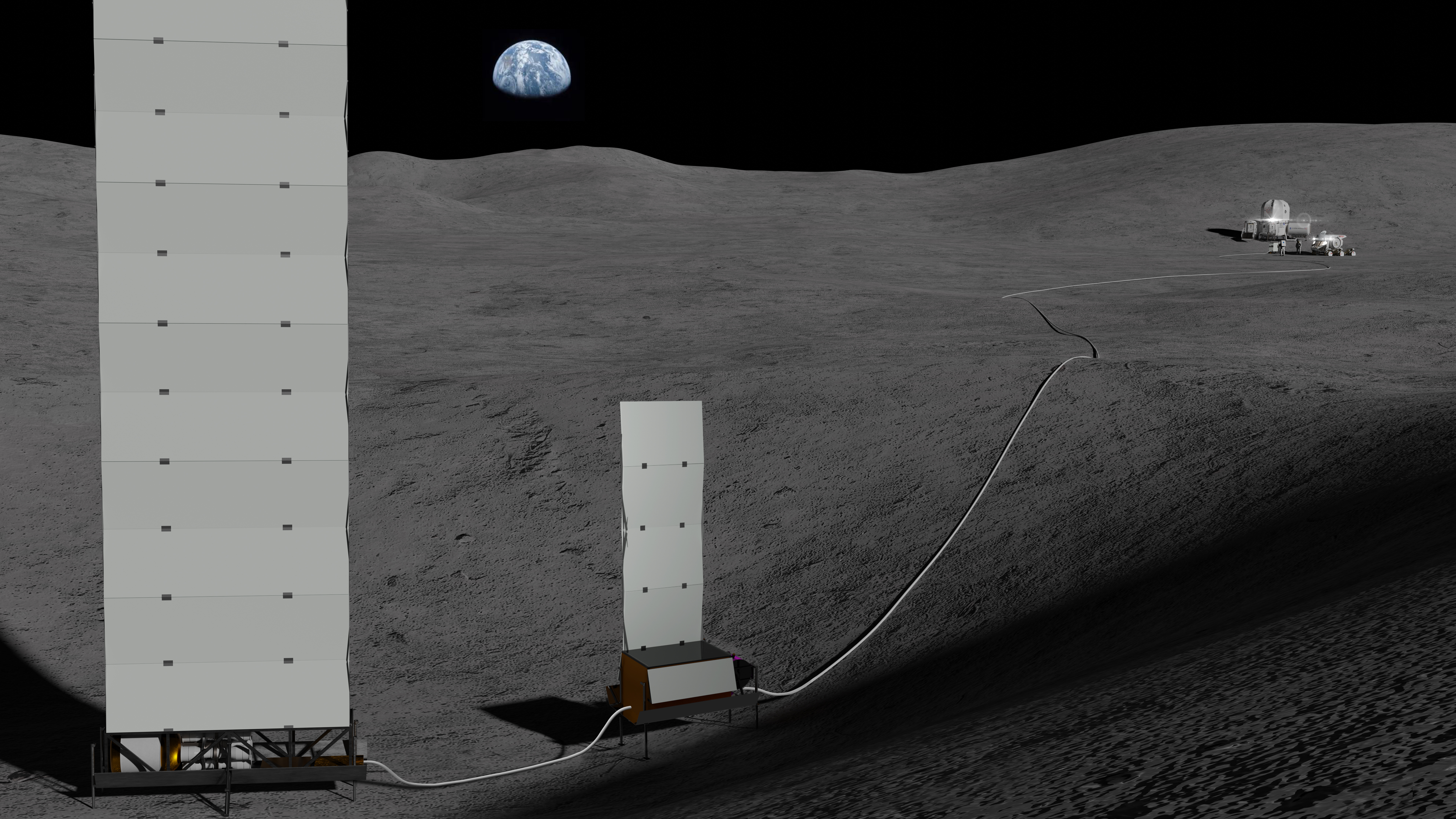
NASA Seeks Partners to Design First Nuclear Reactor for the Moon
NASA is seeking industry partners to develop and test the first nuclear reactor designed to provide electricity on the Moon, a major step toward estab...

NASA+ Documentary Captures Europa Clipper’s Journey Into Deep Space
3 hours ago
NASA’s Webb Shows How Supernova Dust Chronicles Star Evolution
4 hours ago
New gum disease treatment kills bad bacteria while sparing the good
7 hours agoA galactic shock wave could rewrite the map of the Milky Way
8 hours agoWhats New
View All
Super Bowl 2027 and Jay-Z Halftime Show to Screen in Imax Theaters

Oscars: 38 Animated Movies, 104 International Films and 190 Documentaries Make the Eligibility Lists, Setting New Records

Family-Friendly Fortnite Streamer Goes Viral After Picking Up GTA 6 And Performing the Ultimate Heelturn, Including a Bloody Zoo Rampage

Avengers: Doomsday Poster Gives Us Our Closest Look at Doctor Doom's Mask Yet

Steven Spielberg Teams Up With Cillian Murphy for New Western Written by Paul Thomas Anderson

The Feds Left Iowans in the Dark About Plans to Blow Up Tons of Lead

The Internet Reacts to Jensen Huang's Shock Return as Nvidia CEO

Jeffries faces online fury over cryptic answer when asked if Dems would risk gov't shutdown: 'Political games'

Why New Wave Music Won’t Go Away: New Documentary Explores How Synthesizers, MTV and Androgyny Built the Enduring Genre
