
APOD: 2026 November 18 – An M-class Solar Flare
APOD
Astronomy Picture of the Day
Discover the cosmos! Each day a different image or photograph of our fascinating universe is featured, along with a brief explanation written by a professional astronomer.
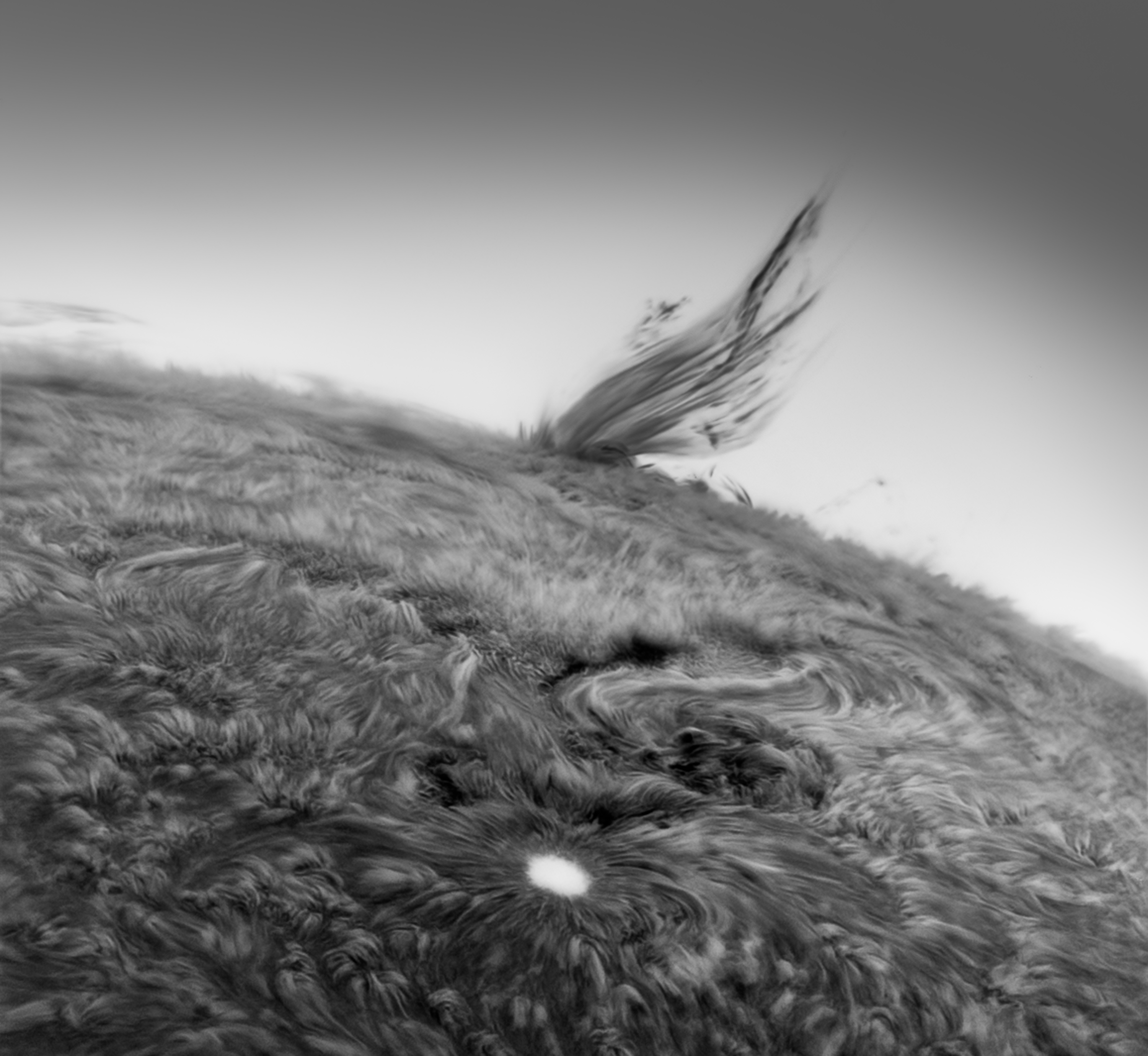
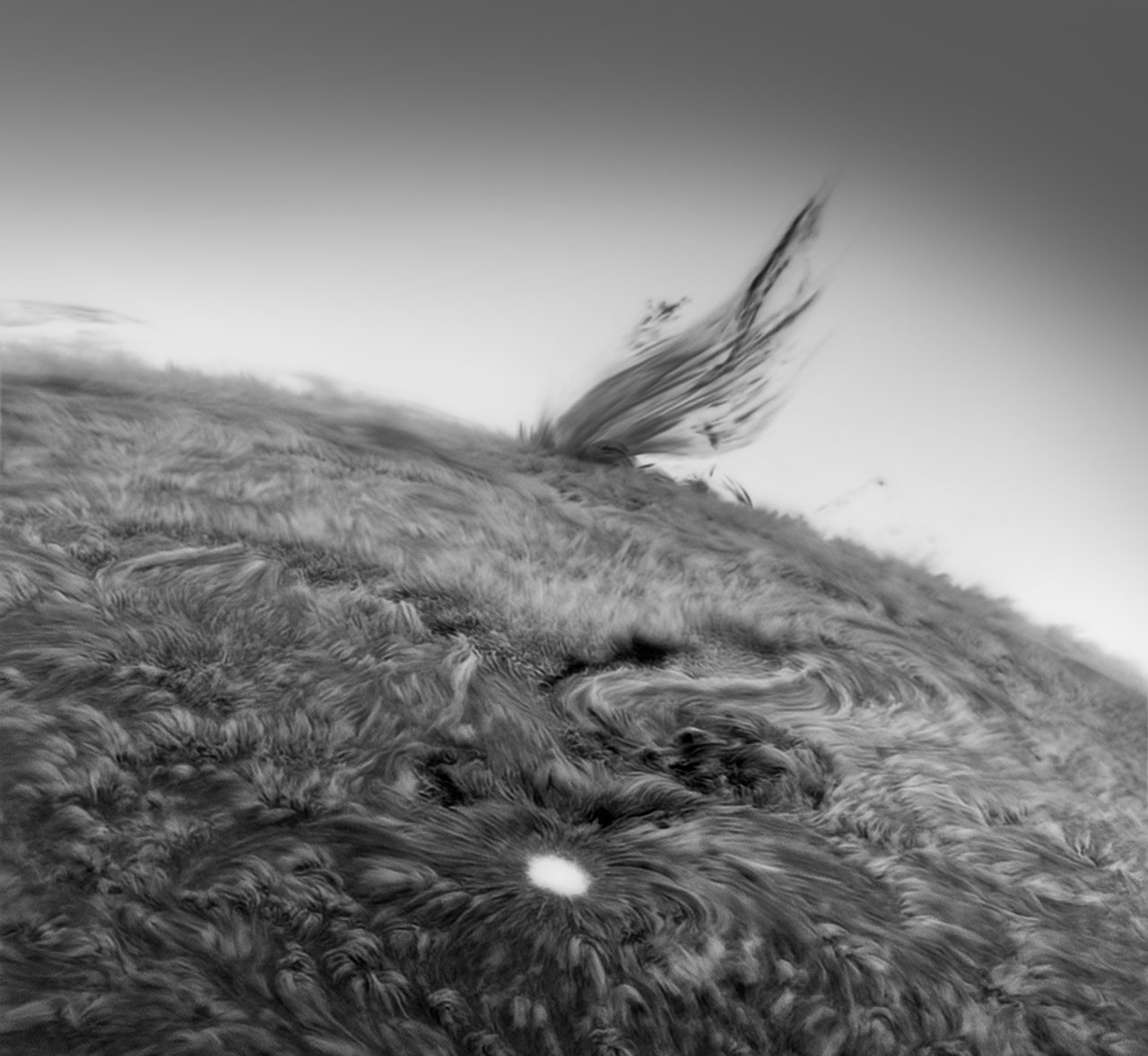
A Medium-Sized Solar Flare
Explanation: What a flare for the chromatic! Today’s image captures a piece of the Sun’s chromosphere, the layer of the Sun’s atmosphere above its surface where the temperature rises. Why would the Sun become hotter farther away from its core? This is potentially due to energy from the swirling magnetic fields extending up through the Sun’s atmosphere. Those same magnetic fields can twist and snap, releasing light and energetic particles as a solar flare. The H-alpha filter used for today’s image captures light from energized hydrogen atoms as they travel off the Sun’s surface during a flare on May 14, 2025. This flare was classified as an M1 based on GOES observations, meaning it was moderately bright in X-rays. M-class flares can cause radio blackouts at Earth’s poles and minor radiation storms that can harm astronauts. They aren’t even the most powerful flares! NASA, NOAA, and other agencies monitor the Sun to predict and identify such storms so we can protect humans on Earth and in space.
Tomorrow's picture: a horse of a different color
| Date: | November 18, 2026 |
|---|---|
| Credit & Copyright: | Mario Cogo |
| Authors & editors: | Keighley Rockcliffe, Robert Nemiroff, Jerry Bonnell, Cecilia Chirenti |
| A service of: |
ASD at NASA / GSFC, NASA Science Activation & Michigan Tech. U. |
Comments 0
Leave a Reply
Your email address will not be published. Required fields are marked *
Science
Explore All


Whats New
View All
‘Dune: Prophecy’ Star Tabu Joins YRF Entertainment’s Netflix Rescue Drama ‘Tunnel Men’ (EXCLUSIVE)

‘Panchayat’ Season 5 Sets December Date on Prime Video (EXCLUSIVE)

Africa’s economic future cannot depend on Washington

How the Houthis fund war effort and tighten grip on Yemen

Verizon Promo Codes: $200 Verizon Gift Cards | November 2026

Maytag Promo Codes: 15% Off Appliances

Squarespace Promo Codes: 55% Off in November 2026

Priceline Promo Codes & Coupons: 10% Off November 2026

Birdfy Discount Codes: 15% Off Sitewide