
Your AI agents can now control your Google Home devices

Smart home owners will soon be able to control their devices connected to Google Home via an AI agent. On Tuesday, Google rolled out early access to its Model Context Protocol (MCP) server for its Google Home ecosystem, which will allow any AI agent that supports MCP — like Claude, Hermes, OpenClaw, ChatGPT, and Google Antigravity — to securely work with their smart home devices and access their event history.
This update will allow people to use natural language instructions to do things like review their camera summaries, monitor smart home activity, control their connected devices, and build their own custom smart home dashboards.
To get the connection set up, users will need to create a Google Cloud project and configure it to use Home MCP. They will then provide the MCP configuration details to their agent of choice and ask it to set it up. The agent will then ask them to sign in and grant permissions. (A setup guide will also be offered in the Google Home Developer Center).
The system will support any device in the Google Home ecosystem, including Google Nest doorbells and thermostats, and “Works with Google Home” (or Matter) devices, like light bulbs.
Google already supports MCP in other areas of its business, including in its Google Cloud and data platforms, developer tools, and Google Workspace, for instance. Support for Google Home is targeted more directly at consumers who are experimenting with AI agents designed to handle everyday tasks.
The company said access to the MCP will roll out starting today and continuing over the coming weeks to subscribers who pay for Google Home Premium Advanced in the U.S. This is the more expensive, $20-per-month subscription tier that provides features like longer event-based video history, descriptive notifications and detailed alerts, tools to search video history, daily summaries, and more.
Google wouldn’t comment on if or when the MCP would roll out more broadly, such as to other subscription tiers or markets.
Google is also soliciting feedback from early adopters during this period by way of its Smart Home for Developers Community, it says.
When you purchase through links in our articles, we may earn a small commission. This doesn’t affect our editorial independence.
Sarah has worked as a reporter for TechCrunch since August 2011. She joined the company after having previously spent over three years at ReadWriteWeb. Prior to her work as a reporter, Sarah worked in I.T. across a number of industries, including banking, retail and software.
You can contact or verify outreach from Sarah by emailing sarahp@techcrunch.com or via encrypted message at sarahperez.01 on Signal.
Comments 0
Leave a Reply
Your email address will not be published. Required fields are marked *
Technology
Explore All
Iceland-based Treble raises $18 million for its voice simulation platform
Treble's voice simulation platform is used by voice AI model developers, AI wearable, and robotics companies

Your startup’s next teammate might be an AI agent: Gusto, Insight Partners, and Leland explain what that changes at TechCrunch Disrupt 2026
2 hours ago
Snap tries to make the case again for its $2,200 smart glasses
5 hours ago
Musk’s long-time backer is giving SpaceX stock to its investors
6 hours agoAl Gore has a surprisingly calm take on the AI data center backlash
6 hours agoWhats New
View All
Iceland-based Treble raises $18 million for its voice simulation platform

Argentinian judge orders suspension of Falklands oil project

Paul Walter Hauser Explains Mystery Pin He Wore to ‘Resident Evil’ Premiere

APOD: 2026 September 17 – A Treasure Chest in the Carina Nebula
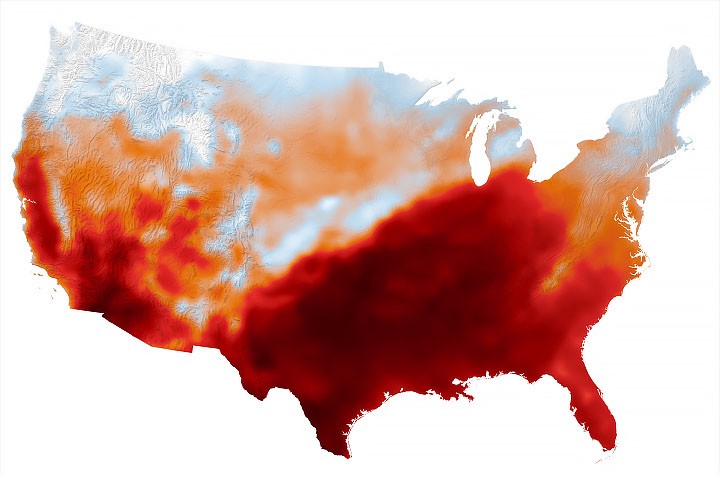
Summer Goes Out With a Heat Dome

Singer Duncan Sheik Hospitalized, in ‘Critical But Stable Condition’

US extends visa ban on Palestinian officials before UN General Assembly
Your startup’s next teammate might be an AI agent: Gusto, Insight Partners, and Leland explain what that changes at TechCrunch Disrupt 2026

Yemeni forces target Houthis and a Saudi base as US rules out direct role
