
TV’s ‘Fall of Rome’ Broken Down by Scott Free’s David W. Zucker, Talking With ‘Wednesday’ Exec Producer Steve Stark at Italian Global Series Fest

The global immediacy of TV and some not so welcome knock-on effects proved the focus of one of the biggest panels at this year’s Italian Global Series, featuring David W. Zucker, chief creative officer at Scott Free, and Steve Stark, chairman and executive producer at Toluca Pictures (“The Handmaid’s Tale,” “Fargo,” “Vikings,” “Wednesday”).
Zucker, who at Scott Free has produced projects such as CBS series “The Good Wife,” HBO’s “Raised by Wolves” and Amazon’s “The Man in the High Castle,” observed the positive and the negative of the new status quo.
“The industry is in an undeniable state of crisis and that’s certainly been echoed by other producers we’ve met around the world,” Zucker said.
Popular on Variety
“It’s born of a couple of particular factors, at least in terms of the U.S. industry,” he added. “Obviously, there’s been the substantial effect of Netflix and the rise of the streamers, not so much in the fact that there were these new broadcast opportunities, but insofar as that they fundamentally changed the way content was produced and the way content related to the viewer.”
Zucker went on to explain that television was about people developing long-term relationships with characters, and that the goal, both financially and creatively, was to exist in these viewer’s homes for as much time as possible. Netflix’s arrival in TV distribution and production (and later Amazon, and others) changed this attitude and approach, due to “shorter attention spans” and the incentive to ask audiences to pay a “a steep regular monthly price,” meaning there always had to be something new. “They weren’t interested in a long-term relationship, they were interested in giving you something that will make you pay again next month,” he explained, saying that this changes both the nature of how the audience views television as well as the very nature of the television which they’ll be viewing.
There’s also some reflection on how the arc of this transformation of television has gradually bent back towards the old ways. “The irony is, and this is honestly something that’s quite sickening for those of us who existed before that period, they are now getting back into the advertising business, they’re getting into the distribution business,” Zucker said. “They’re basically trying to resurrect a version of the industry that existed before they came in and fundamentally changed it and blew it up. The difference is what used to be free in America for television, we now have to pay and pay and pay and pay.” Zucker sees this as a reflection of the socio-political climate, as well as “what’s going on in an industry that has been abducted by Wall Street,” that such changes have put the industry in the hands of people who care more about selling a product than the art itself.
Zucker also pointed to the multiple recent mergers of studios as an ill omen. “Since we’re in Italy: this is the fall of Rome, and it’s hard not to feel that,” he said. “And it’s tragic in many ways, because what’s been a century of studios that will disappear likely in the next few years: we’ve already seen Fox and Disney merge, we are seeing Paramount consume Warner Bros., that was unfathomable even two years ago, and that is that’s what’s being done for the oligarchy of the business, and so we are definitely seeing a fundamental change.”
Stark later added that he misses there being more producers and commissioners who would make decisions based on a gut feeling, attributing this to companies leaning harder on data – saying that it’s worth using, but there are drawbacks. “You listen to it, but the problem is sometimes the information freezes everybody,” Stark explains. “I don’t think [the data] lies, but I think it’s misused sometimes, and the thing about this at all is that every show that really makes a mark in our business is unique, it’s original, it’s fresh, it’s not what you program, and data doesn’t show you that those are successful, because there’s no data to show from that.”
Beyond the trials of dealing with contemporary information overload, the panel turned to production in the U.K. and Europe. Stark opened with mention of working with the BBC. “They don’t want to buy from American producers, they want to buy from the local U.K. producers. So, I have to partner with someone there if I want to sell something to BBC,” Stark says, then saying that for his upcoming Netflix show “The Bombing of Pan Am Flight 103,” (the story of the bombing of a commercial flight over Lockerbie, Scotland in 1981), they had to partner with a U.K. production company.
The conversation turned back to what has changed in how distribution has evolved internationally, due to streaming. Zucker weighed up the positives and negatives of the transformation, noting that “the Netflix era has vastly improved the viewing opportunities.”He continued: ”[Now] we’re importing the best of international content, and there’s a dialog, and that’s thrilling to be able to tell stories coming out of Asia, out of South America, out of Africa, and [find] where there are intersections in a global marketplace.” There was a bit of temperance to follow. “There’s an other cynical side. These companies are trying to exploit, exploit local content and local artists to get a cheaper product than they could in America, and that is its own conversation. But the upside is for audiences, we are experiencing much more in common than we ever have before.”

Comments 0
Leave a Reply
Your email address will not be published. Required fields are marked *
Entertainment
Explore All
Zendaya Was So Cold on First Day of ‘The Odyssey’ Filming That Her ‘Mouth Was Frozen’ and She Couldn’t Say Her Lines; Nolan Calls Her ‘Always Perfect’
Zendaya was in Iceland on the first day of filming her scenes for Christopher Nolan’s “The Odyssey” and could not open her mouth to...

Moritz de Hadeln, Former Berlinale and Venice Film Festival Chief, Dies at 85
1 hour ago
World Cup Delivers Huge Viewership and Pop Culture Sizzle for Fox, Telemundo and Peacock
59 minutes ago
Harlan Coben’s Myron Bolitar Netflix Series Casts Colin Woodell, KJ Apa, Diane Guerrero in Lead Roles
38 minutes agoSarajevo’s CineLink Reveals Lineups of Co-Production Market and Drama Sections, Partners With Cannes’ Critics’ Week
1 hour agoWhats New
View All
Harlan Coben’s Myron Bolitar Netflix Series Casts Colin Woodell, KJ Apa, Diane Guerrero in Lead Roles
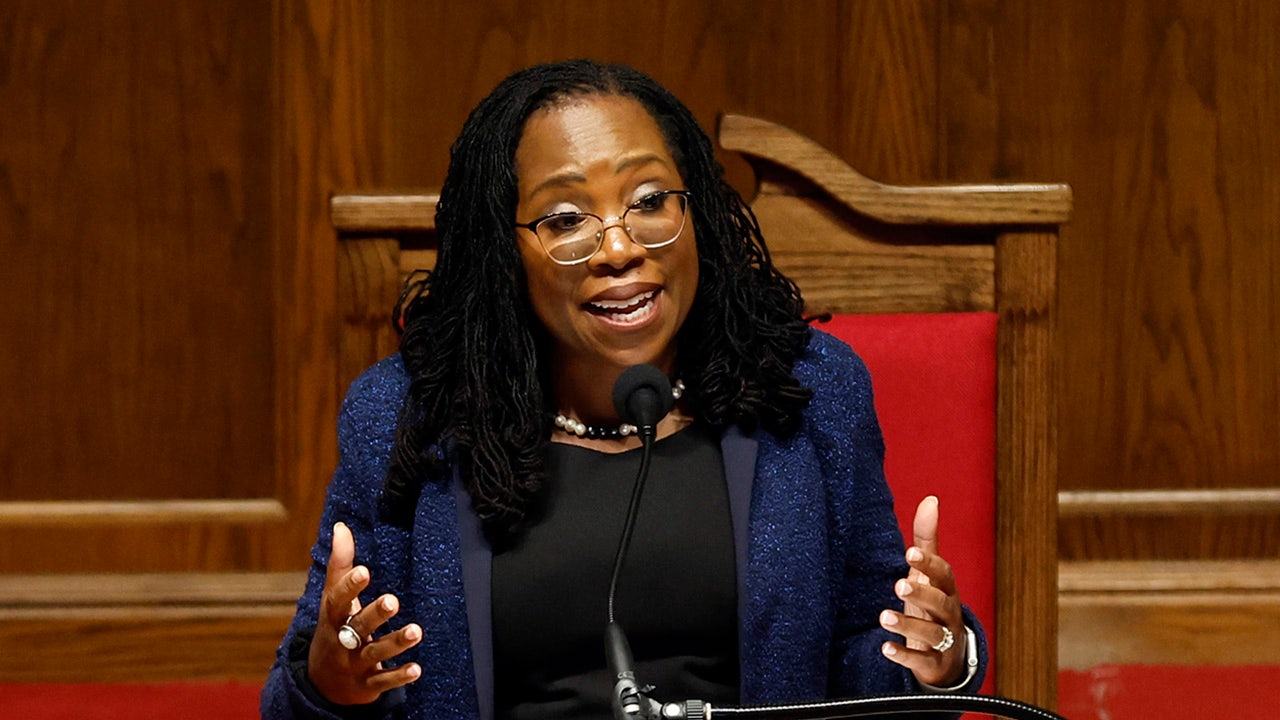
Brown Jackson’s latest spotlight moment fuels accusations she’s forgetting her day job: 'Not celebrities'
3 Quantum Computing Stocks to Buy in July

Nintendo Switch Consoles Will No Longer Be Sold From Mid-February 2027 Onwards — at Least in Europe

Tech stocks on track for record annual inflows as investors pile into the AI trade
S&P Global (SPGI): Strong Fundamentals Amid AI Uncertainties?
World Cup Delivers Huge Viewership and Pop Culture Sizzle for Fox, Telemundo and Peacock
Zendaya Was So Cold on First Day of ‘The Odyssey’ Filming That Her ‘Mouth Was Frozen’ and She Couldn’t Say Her Lines; Nolan Calls Her ‘Always Perfect’

NASA Seeks Industry Input on Second Phase of Commercial Space Stations
